
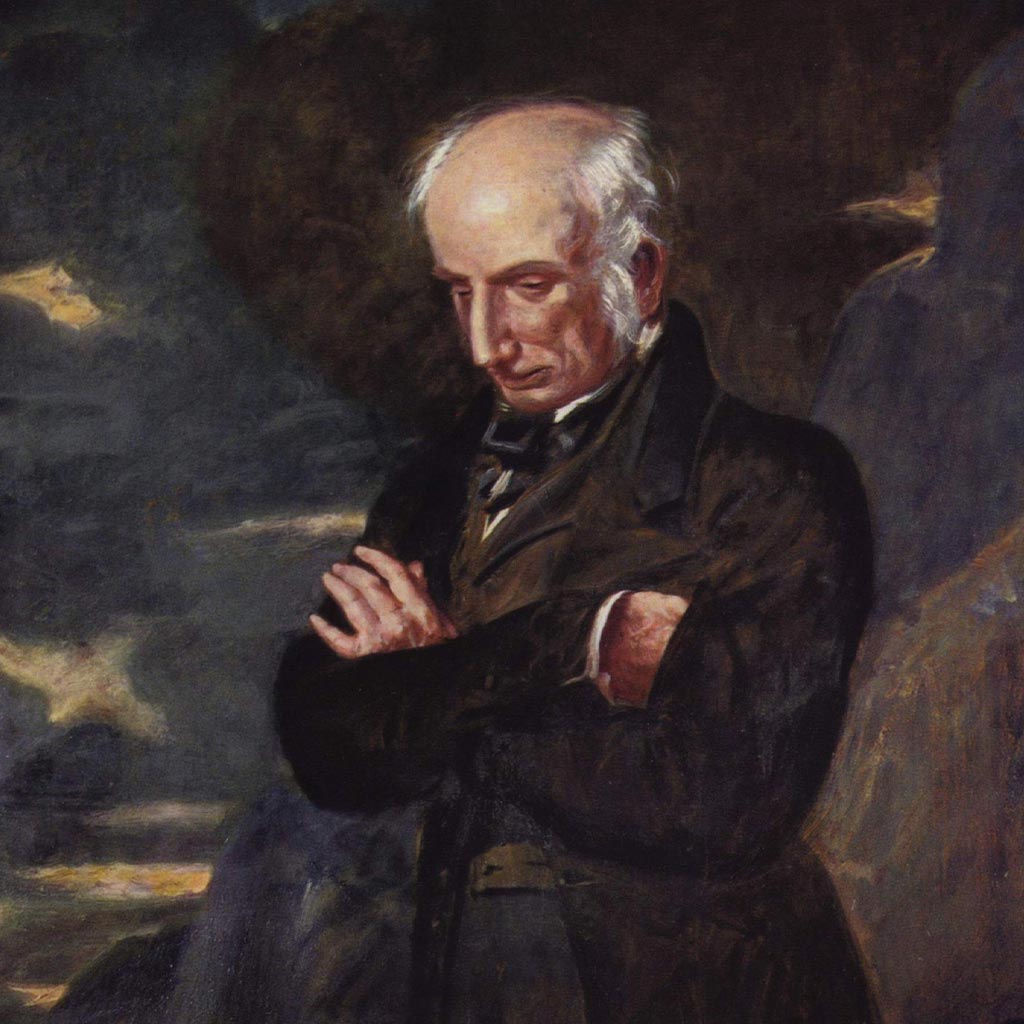
(1770–1850) was a central figure of the Romantic movement, famously redefining poetry as the “spontaneous overflow of powerful feelings” that are “recollected in tranquility“. His work revolutionized English literature by focusing on the lives of ordinary people and the restorative power of nature.
Most Famous Individual Poems
- “I Wandered Lonely as a Cloud” (Daffodils): His most iconic work, which captures the joy of nature and the lasting power of memory.
- “Lines Composed a Few Miles above Tintern Abbey”: A foundational Romantic poem exploring how nature nourishes the human spirit over time.
- “Ode: Intimations of Immortality”: A profound meditation on the loss of childhood innocence and the soul’s divine connection to the world.
- “The Solitary Reaper”: Describes a woman’s haunting song in a Scottish field, emphasizing the beauty of simple, rustic life.
- “The World Is Too Much With Us”: A sonnet criticizing how industrialization and “getting and spending” distance humanity from nature.
Major Collections and Works
- Lyrical Ballads (1798): Co-authored with Samuel Taylor Coleridge, this landmark collection officially launched the Romantic era in England.
- The Prelude: His magnum opus, an autobiographical epic that chronicles the “growth of a poet’s mind.” It was published posthumously in 1850.
- The Lucy Poems: A series of five elegiac lyrics written about an idealized, mysterious girl named Lucy.
Core Themes in His Poetry
- Nature as Teacher: Wordsworth believed that the natural world provides a moral and spiritual education superior to books or formal schooling.
- Childhood and Innocence: He saw children as being closer to a divine, spiritual world than adults.
- Common Life: He advocated for using “the language really used by men” and choosing subjects from everyday, humble life.
