
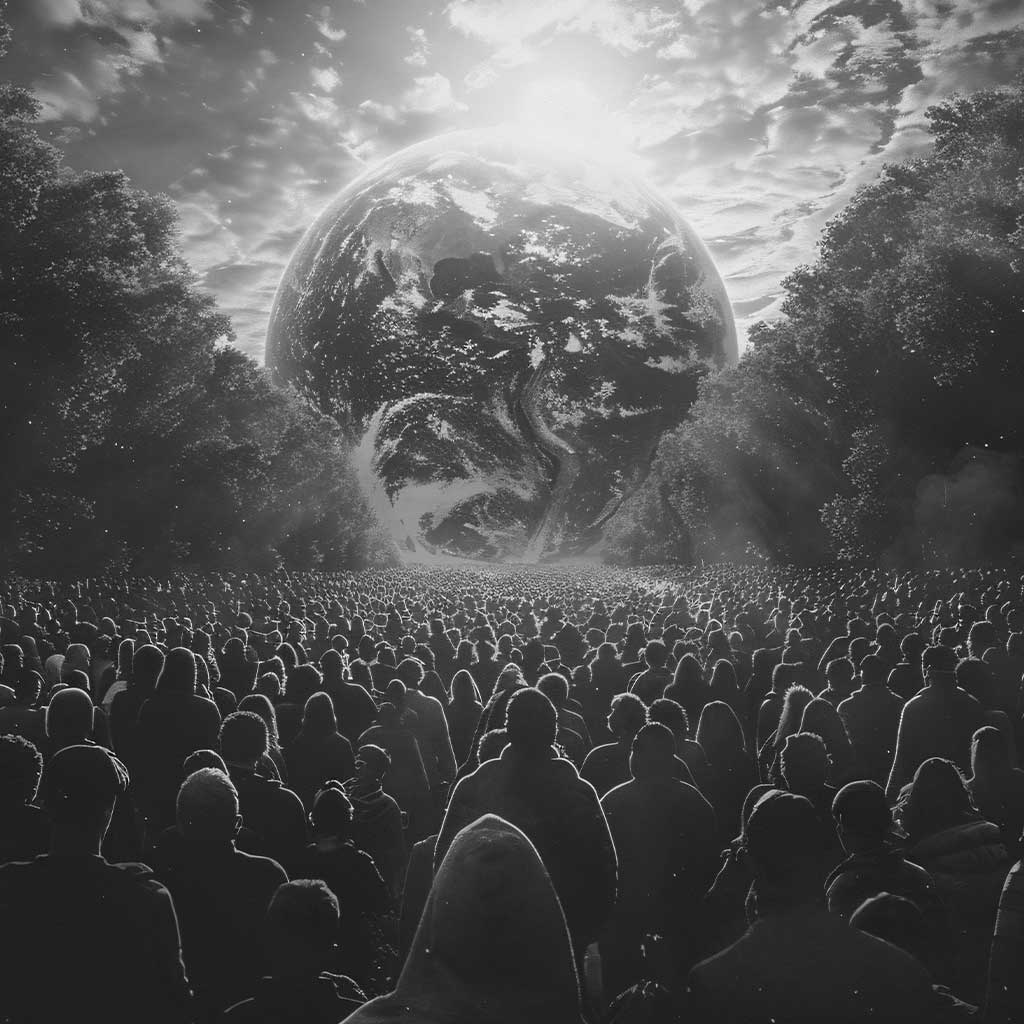
In a world that often feels fragmented by “narrow domestic walls,” there exists a deeper, invisible thread that binds us all. It is the language of the soul—expressed through the timeless wisdom of poets, the precision of classical melody, and the philosophy of art itself.
To live a life aligned with this higher truth is to recognize that we are not merely observers of beauty, but active participants in its creation. Here is a journey through the voices that remind us how to align our spirit with the universal rhythm.
1. The Divine Connection
We begin with the realization that our lives are a vessel for something greater. In Your Love — Poetry of Rabindranath Tagore, we are invited to pray for a divine love that infuses every thought and deed, turning our existence into “sweet music.” This isn’t just poetry; it’s a blueprint for living with intention. When our internal world is sweetened, our external world follows, as captured in Tagore’s prayer, Be Sweet, My Lord, which seeks grace for the earth, the air, and the hearts of all people.
2. Art as a Spiritual Necessity
Why do we create? According to the insights in What is the Philosophy of Art? Dr. A.K. Coomaraswamy, art is not a luxury or a hobby—it is a spiritual necessity. It is the “universal language” that helps us navigate the human experience. This philosophy is brought to life through the rigorous beauty of Indian Classical music. In Kaushiki Chakraborty’s Raag Bhairavi, we see how technical mastery meets soul-stirring devotion, proving that when we respect the dignity of the artist, we respect the spirit itself.
3. The Fusion of Tradition and Vision
True alignment requires us to honor our roots while reaching for the sky. This is perfectly illustrated in Tagore in Raag, where Rabindra Sangeet meets Hindustani Classical music. It shows us that even our most revolutionary ideas are rooted in a “Fine Tune” of traditional Raags. It is from this grounded place that we can truly achieve the vision in No Fear — Rabindranath Tagore: a life where the mind is led forward into “ever-widening thought and action.”
4. Embracing the Duality
A philosophy of truth does not ignore suffering; it integrates it. As expressed in A Tear and A Smile — Khalil Gibran, both sorrow and joy are essential for the soul’s purification. We must learn to see the “universe in ecstatic motion,” a central theme in the Best Rumi Quotes on Life. Rumi teaches us that the love we seek is already seeking us, and that our task is simply to find the barriers we have built against it.
By integrating these voices—Tagore’s vision, Rumi’s love, Gibran’s duality, and the discipline of classical art—we find a path home to ourselves. Let these links be your guide to a life lived in harmony with the Great Spirit.
