
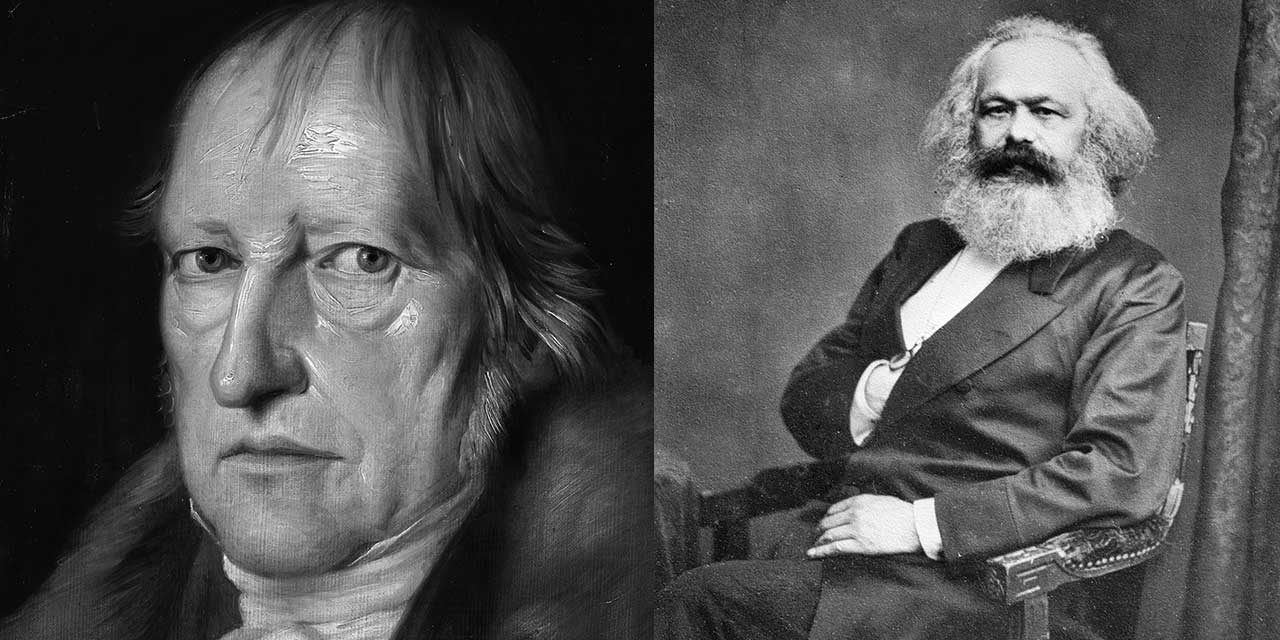
A theatrical conversation between G.W.F. Hegel and Karl Marx often centers on the inversion of the dialectic—moving from Hegel’s idealist “Spirit” to Marx’s materialist class struggle. This dramatic, often pedagogical, dialogue explores how Hegel’s philosophy of history and the “cunning of reason” was adapted by Marx to critique capitalism, transforming philosophy from interpretation into revolutionary action.
Key Themes in Theater and Dialogue
Dramatizations and discussions frequently highlight the following philosophical shifts:
The Inversion: Scenes often focus on Marx’s famous assertion that he found Hegel’s dialectic “standing on its head” and turned it “right side up” to prioritize material reality over abstract ideas.
Alienation: Playwrights contrast Hegel’s abstract, religious-based alienation with Marx’s application of the concept to the economic and physical alienation of workers within a competitive capitalist system.
The “Cunning of Reason”: Dramatic irony is used to depict Hegel’s idea that history uses individual passions to achieve its own unseen goals, sometimes mirrored in works like Friedrich Dürrenmatt’s The Visit.
Reconciliation vs. Revolution: A central conflict in these dialogues is Hegel’s pursuit of reconciliation with the modern state versus Marx’s imperative to dismantle it.
Brechtian Influence: Bertolt Brecht’s “alienation effect” (Verfremdungseffekt) serves as a theatrical tool to encourage audiences to critically analyze social structures, mirroring the Marxist critique.
Common Dramatic Scenarios
The relationship between these two thinkers is often portrayed through specific narrative lenses:
The Meeting in Berlin: Imagined dialogues between a young, fiery Marx and an established, older Hegel, focusing on the tension between the “is” (current reality) and the “ought” (future potential).
The Philosophical “Sledgehammer”: Plays exploring how Marxism acts as a “rational kernel” extracted from the “mystical shell” of Hegelian idealism.
Further Explorations
Academic Discussion: Philosophical underpinnings are explored in classic series, such as the 1987 dialogues between Bryan Magee and Peter Singer.
Critical Theory: Contemporary examinations, such as interviews with Andy Blunden, analyze the differences between Hegel and Marx in the context of modern society.
